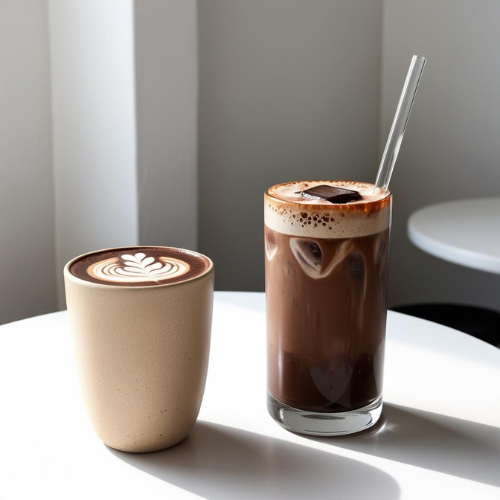
What is a mushroom latte

A mushroom latte is a milk-based drink made with mushroom powder or extracts, often combined with cocoa, coffee or spices. The mushrooms commonly used in these blends, including chaga and reishi, are chosen for their history of traditional use and the compounds researchers are studying. These are not psychedelic mushrooms, and a mushroom latte does not necessarily contain coffee.
At Superlatte, our version pairs chaga and reishi with cocoa. As the founder, I think the useful question goes beyond what is in the pouch: what can those ingredients reasonably offer? There is interesting research here, but a cup of hot chocolate should not need a medical CV to justify its existence.
What are the potential benefits of a mushroom latte?
The interest centres on naturally occurring compounds in mushrooms and, in a chocolate-based latte, cocoa. Researchers study these ingredients for effects on processes such as blood-vessel function, immune activity and oxidative stress. The amount and quality of evidence differ considerably between ingredients.
It helps to separate three things: traditional use, results in cells or animals, and benefits demonstrated in people. They can all inform research, but they do not answer the same question. A positive laboratory result is a reason to investigate further, rather than proof that drinking a latte will produce that effect.
| Ingredient | Why researchers are interested | What that means for your mug |
| Cocoa | Flavanols and their effects on blood-vessel function. | Human research exists, but flavanol content varies. Cocoa percentage alone does not establish a study-equivalent serving. |
| Chaga | Antioxidant activity and effects on immune and inflammatory pathways in preclinical work. | Promising laboratory findings do not yet establish health benefits from drinking chaga. |
| Reishi | Beta-glucans and triterpenes, with research into immune activity and other outcomes. | Some human studies exist, but preparations and results differ. A latte cannot inherit their findings automatically. |
What are the benefits of cocoa in a mushroom latte?
Cocoa contains flavanols, a group of plant compounds that have attracted particular interest for cardiovascular health. Human trials have examined how flavanol-rich preparations affect blood-vessel function and other measures. That gives cocoa a more developed human evidence base than chaga.
One large study, the COSMOS randomised trial, followed more than 21,000 older adults using a standardised cocoa extract providing 500 mg of flavanols daily. It did not find a statistically significant reduction in its main outcome, total cardiovascular events. A secondary finding for cardiovascular deaths was encouraging, but requires further investigation.
The distinction matters: this was a measured extract, not an ordinary hot chocolate. Cocoa processing and composition affect flavanol content, so neither a dark colour nor a high cocoa percentage tells us that a drink supplies the trial’s dose. Cocoa is an interesting ingredient without turning every mug into a heart-health claim.
What are the potential benefits of chaga?
Chaga grows on trees, commonly birch, in cold climates and has a history of use as a brewed drink. Research has explored its antioxidant activity and effects on immune and inflammatory pathways, largely in laboratory and animal studies.
Memorial Sloan Kettering’s chaga review notes that its safety and efficacy have not yet been evaluated in clinical studies. That means claims that a daily chaga latte boosts immunity or reduces inflammation go beyond the evidence currently available.
In our blend, chaga also adds a coffee-like depth. That is a flavour contribution, not a caffeine claim or a health outcome, but it explains part of why the ingredient sits comfortably alongside cocoa.
What are the potential benefits of reishi?
Reishi has a long history in Asian traditional medicine. Its constituents include beta-glucans, a type of polysaccharide, and triterpenes. Researchers have investigated immune-related effects and a range of other possible uses.
There is some human research, but findings are mixed and involve particular extracts, doses and groups of people. Memorial Sloan Kettering’s reishi review describes both promising findings and trials that did not support the proposed benefit. It does not establish that an everyday reishi latte improves sleep, reduces stress or prevents illness.
“Calming mushroom” is an appealing description. A demonstrated calming effect from your finished drink is a separate question.
Are mushrooms and cocoa better together?
They bring different compounds to the same drink, which makes the combination interesting. But the research discussed here does not establish that combining cocoa, chaga and reishi produces greater health benefits than consuming the ingredients separately.
To demonstrate that, a study would need to test the relevant combination, at the relevant quantities, and measure outcomes in people. Adding together three ingredient stories does not create evidence for a fourth, more impressive story.
My approach is to explain what we put into the blend and make the distinction visible. You can be interested in these ingredients without treating the finished drink as a proven treatment.
Rule of thumb
When you read a benefit claim, ask: was the research in people, did it use the same preparation, and was the amount comparable? An ingredient appearing in a study does not mean every drink containing it has the same effect.
Why do mushroom preparation and serving size matter?
A mushroom powder and a concentrated extract can have different compositions. Even two extracts may differ in how they are made and which compounds they contain. Ingredient weight alone cannot tell you whether a product matches a preparation used in research.
Superlatte Shroom Hot Chocolate contains 50% cocoa, 5% chaga and 5% reishi. Its 9 g serving therefore provides 4.5 g cocoa and 450 mg of each mushroom ingredient. Those are ingredient quantities, not a declaration of flavanol or beta-glucan levels, and not a proven therapeutic dose.
For a closer look at labels, serving costs and what to ask a supplier, read our mushroom hot chocolate buying guide.
Does a mushroom latte contain caffeine?
It depends on the base. A coffee-based mushroom latte contains caffeine from coffee; a cocoa-based version contains naturally occurring caffeine from cocoa. Chaga’s coffee-like flavour does not mean coffee has been added.
Our cocoa blend is not caffeine-free. Without a tested amount per serving, I would not attach an exact caffeine number to it or promise that it will suit everyone before bed.
Is a mushroom latte suitable for everyone?
Check the ingredients with your pharmacist or clinician if you take medicines, especially blood thinners, or have a medical condition. The clinical reviews linked above describe potential interactions. If you are pregnant, breastfeeding or considering a mushroom blend for a child, seek individual advice rather than treating a history of traditional use as a safety guarantee.
How to make a mushroom cocoa latte
For our blend, mix 9 g with a little hot water to make a smooth paste, then add 250 ml hot or steamed milk and froth. Choose plant-based milk for a dairy-free drink. Taste before adding sweetener; the blend already contains coconut sugar.
There is room to enjoy a mushroom latte for what it is today while staying interested in what research may establish tomorrow. For me, the ingredients deserve curiosity, and the claims deserve a little scrutiny.